Planning a Tanzania Ngorongoro safari raises the Ngorongoro safari costs question quickly.
How much will it cost?
What will you actually see?
When should you go, and where do you sleep on the crater rim?
Prices and package details vary widely between operators.
It is easy to feel lost after an hour of searching.
Here is the short version. A Ngorongoro Crater safari usually takes 1 to 2 days inside a longer northern circuit trip. Budget group-joining safaris start around $850 for 3 days, and private and luxury lodge trips cost considerably more. The crater floor holds lions, black rhinos, hippos, flamingos and huge herds of zebra and wildebeest, all within a single day’s drive. You can go year-round, though the dry months from June to October give the easiest viewing.
We run these trips from Arusha and Moshi, so this guide comes from daily experience, not guesswork. Below, you will find realistic costs by budget level, the wildlife you can expect, the best months to visit, and lodge and camp options on the rim. You will also see how to combine the crater with the Serengeti or a Kilimanjaro climb.
Why a Ngorongoro safari is worth planning
A wildlife arena with natural walls
Nowhere else in Africa packs this much into so little space. The crater is a collapsed volcano, about 100 square miles (260 km²) across the floor, with walls rising roughly 2,000 feet (600 m). Those walls act like a fence. Around 25,000 large animals live inside, and many stay year-round, so your sightings do not depend on a migration.
The crater walls keep the wildlife in, so you get Serengeti-level sightings in a single morning.
A Tanzania Ngorongoro safari rewards you quickly. On a typical descent, you can see lions, hippos and a black rhino before lunch. That makes it one of the best first-safari stops for travelers who worry about spending days searching for animals.
Key facts at a glance
Before you book, it helps to know the basics. The Ngorongoro Conservation Area has been a UNESCO World Heritage Site since 1979, and park rules shape how your day works. Vehicles descend at dawn to beat the heat and the crowds.
| Feature | Detail |
|---|---|
| Crater floor | About 100 sq mi (260 km²) |
| Wall height | About 2,000 ft (600 m) |
| Rim elevation | Roughly 7,500 ft (2,300 m) |
| Time on the floor | Up to 6 hours per vehicle |
| Best for | Big cats, rhinos, hippos, flamingos |
The rim sits high, so nights are cold and mornings can be foggy. Pack a warm jacket even in the dry season. That rim elevation also explains the chilly 6 a.m. start before you drop into warmer grassland.
Easy to fit into a bigger trip
Geography works in your favor. An Ngorongoro Tanzania safari fits neatly on the northern circuit between Lake Manyara, Tarangire and the Serengeti. You rarely need a dedicated trip, and many 3-day group-joining safaris pair the crater with one of its neighbors.
Climbers benefit too. After a summit push, a crater day is a gentle reward for tired legs, because you stay seated in a 4×4 while the wildlife comes to you. Our combined climb-and-safari packages run 11 to 12 days from about $3,250, and they link Kilimanjaro, the Serengeti and the crater in one smooth plan.
Wildlife you can see in the crater
Animals you will almost certainly see
Most safari Tanzania Ngorongoro guests ask about the Big Five first. The crater delivers lions, buffalo and black rhinos, plus a few old bull elephants. Leopards stay hidden in the forest patches, so treat them as a bonus.
| Animal | Where to look | Your odds |
|---|---|---|
| Zebra and wildebeest | Open grassland | Near certain |
| Hippos | Ngoitokitok Springs | Near certain |
| Lions | Central plains | Very high |
| Spotted hyenas, jackals | Across the floor | High |
| Flamingos | Lake Magadi | Seasonal |
| Black rhinos | Western side | Moderate, often distant |
Rhinos are the prize, and they are the sighting people remember. Few places offer a daylight chance at a wild black rhino, and the crater is among the most reliable. Your guide will scan the plains by radio with other drivers.
Bring binoculars: the rhinos are the prize, and they often graze far from the road.
What you will not see
No giraffes live on the crater floor. The steep walls keep them out, and elephants are mostly lone bulls, not the big family herds you find elsewhere. Know this before you book, so you are not disappointed.
Smart planning fills the gaps. Tarangire National Park has elephant herds and baobab trees, while the Serengeti adds giraffes, cheetahs and open-plain leopards. Pair the crater with one of them, and ask for the 6 a.m. descent so you reach the lions while they are still active.
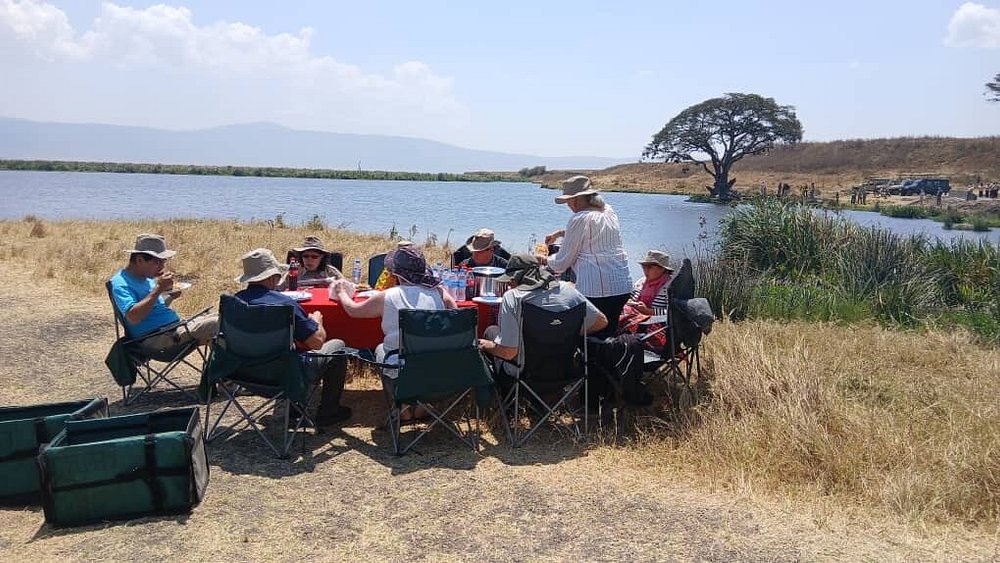
Photographers should also know that the light is best early and late. Midday brings haze and harsher shadows, so your guide may slow down for a picnic lunch at the hippo pool.
How much a Ngorongoro safari costs
Cost is the first question we hear, and the honest answer is a range of Tanzania safari prices. A safari Tanzania Ngorongoro trip costs far less in a shared jeep than in a private lodge, so start by choosing your style and setting a daily budget.
Typical prices by budget level
Budget travelers can join a group and pay from about $850 for 3 days. Private and luxury trips cost more because you pay for your own vehicle and a better bed. The table shows where each style starts.
| Style | Typical length | Starting point |
|---|---|---|
| Group-joining budget | 3 days | From about $850 |
| Private mid-range | 3 to 5 days | Quoted per group size |
| Luxury lodge or flying | 4+ days | Top of our $850 to $9,000+ range |
| Climb plus safari combo | 11 to 12 days | $3,250 to $4,360 |
What drives the price
Park fees take a large bite. Conservation area entry is charged per person per day, and the crater descent fee is charged per vehicle, roughly $295 at last check. Rates change, so confirm current figures before you pay.
Splitting the vehicle fee across more people is the easiest way to cut your cost.
Several other factors move the total:
- Group size: more people in one 4×4 means a lower share per person.
- Lodge level: a rim lodge with crater views costs much more than a Karatu guesthouse.
- Trip length: a second night lets you add Tarangire or Lake Manyara.
- Season: June to October and the Christmas weeks are the priciest.
Every quote we send is free and 100% tailor-made, and some trips carry discounts of about 6% to 11%. Compare any Tanzania Ngorongoro safari offer line by line, and check that park fees, meals and airport transfers are included before you say yes.
How to plan your safari: timing, route and logistics
Good planning matters more than a big budget. Get the timing, route and paperwork right, and a safari Tanzania Ngorongoro trip runs smoothly from the airport to the crater floor.
Pick your season
The crater works all year because the animals live there permanently. June to October is the dry season, with short grass and easy sightings, but it is also the busiest. March to May brings the long rains, lower prices and fewer vehicles, though some tracks turn muddy.
| Months | Conditions | Trade-off |
|---|---|---|
| June to October | Dry, cool, clear | Highest prices, most vehicles |
| November to February | Green, brief showers | Good value, mixed weather |
| March to May | Long rains | Lowest rates, muddy roads |
Build a simple route
Most travelers fly into Kilimanjaro International Airport, about an hour from Arusha. From there, Karatu is roughly 3 hours by road, and the crater gate is another 30 minutes. A classic 3-day Tanzania Ngorongoro safari looks like this:
- Day 1: Drive from Arusha to Tarangire or Lake Manyara, then overnight in Karatu.
- Day 2: Descend into the crater early, picnic by the hippo pool, and return to your lodge.
- Day 3: Drive back to Arusha, or continue west to the Serengeti.
Wherever your trip goes next, sleep near the gate the night before the descent. A long drive that morning eats into your best hours on the floor.
The best crater day starts the night before, with a bed within 30 minutes of the gate.
Handle the paperwork early
Paperwork is simple if you start on time. Book 3 to 6 months ahead for June to October, and check visa and vaccination rules with official Tanzanian sources before you fly. Then run through this list:
- Passport valid for at least 6 months
- Tanzania visa, applied for online or on arrival
- Yellow fever certificate if you arrive from a risk country
- Travel insurance that covers medical evacuation
- Warm layers, binoculars and small bills for tips
Where to stay: crater rim or Karatu
Your bed the night before the descent shapes your crater day. You have two real choices, and both work well for a safari Tanzania Ngorongoro itinerary. The better pick depends on whether you value views or value.
The two options side by side
Lodges on the crater rim sit at about 7,500 feet and look straight down to the floor. Karatu is a farming town with cheaper lodges and milder nights, and it is a short drive from the gate. The table shows the trade-offs.
| Crater rim | Karatu | |
|---|---|---|
| Distance to gate | Under 15 minutes | About 30 minutes |
| Views | Crater floor from your room | Farmland and coffee estates |
| Price | Higher, often luxury | Budget to upper mid-range |
| Nights | Cold, often foggy | Milder |
| Best for | Honeymoons, short trips | Budget travelers, families |
Which one should you pick?
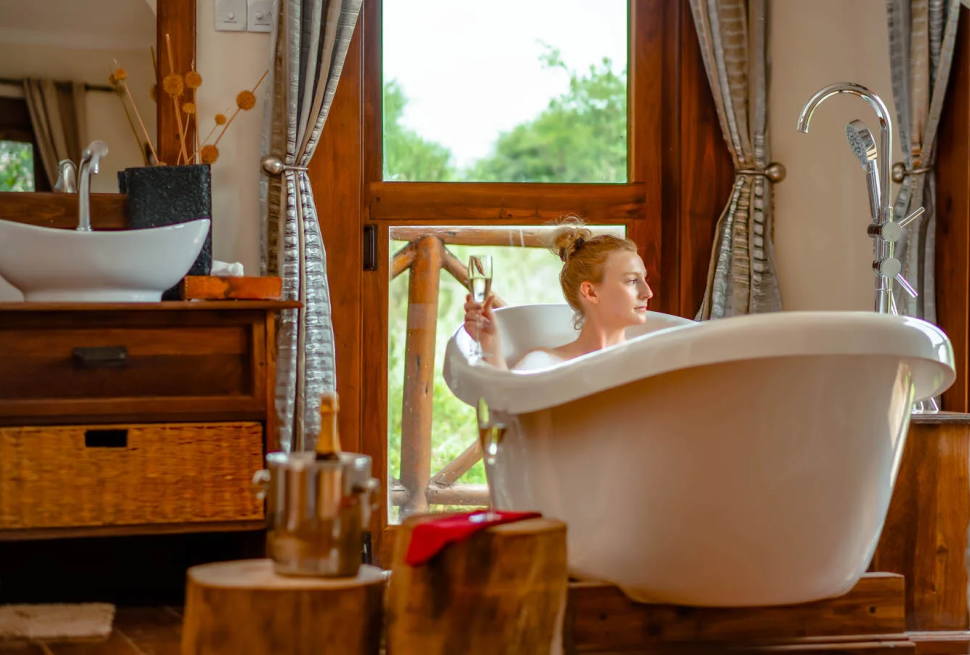
Choose the rim if the setting is part of the trip. Safari lodges such as Ngorongoro Serena and Sopa give you sunrise over the crater and a later wake-up, since the descent road is minutes away. For a honeymoon or a once-only Ngorongoro Tanzania safari, that view is worth the extra cost.
Karatu suits almost everyone else. You get comfortable rooms at a fraction of the price, plus good restaurants and easy stops at Lake Manyara or Tarangire on the way. Many of our budget group-joining guests sleep here, and they still reach the gate in time for the early descent.
Sleep on the rim for the view, sleep in Karatu for the value, and either way be at the gate early.
Both options sell out from June to October. Reserve your lodge first, then build the rest of the route around it. If you are unsure, ask for a quote that prices one night on the rim and one in Karatu, so you can see the difference in real numbers before you commit.
Ready to plan your crater safari?
Your Tanzania Ngorongoro safari comes down to four choices: budget, season, route and bed. Group-joining trips start around $850 for 3 days, and June to October gives the easiest viewing. Sleep near the gate, then descend at dawn to meet lions, hippos and black rhinos before the crowds arrive.
Remember that the crater is one great day, not a whole holiday. Pair it with Tarangire or the Serengeti for elephants and giraffes, or use it as a gentle reward after a Kilimanjaro climb. Either way, book 3 to 6 months ahead for the dry season.
Tell us your dates, group size and budget, and we will handle the rest. Request a free, tailor-made quote from Climb Kilimanjaro and Safaris and our team will shape a Serengeti and Ngorongoro safari that fits your style and your budget.