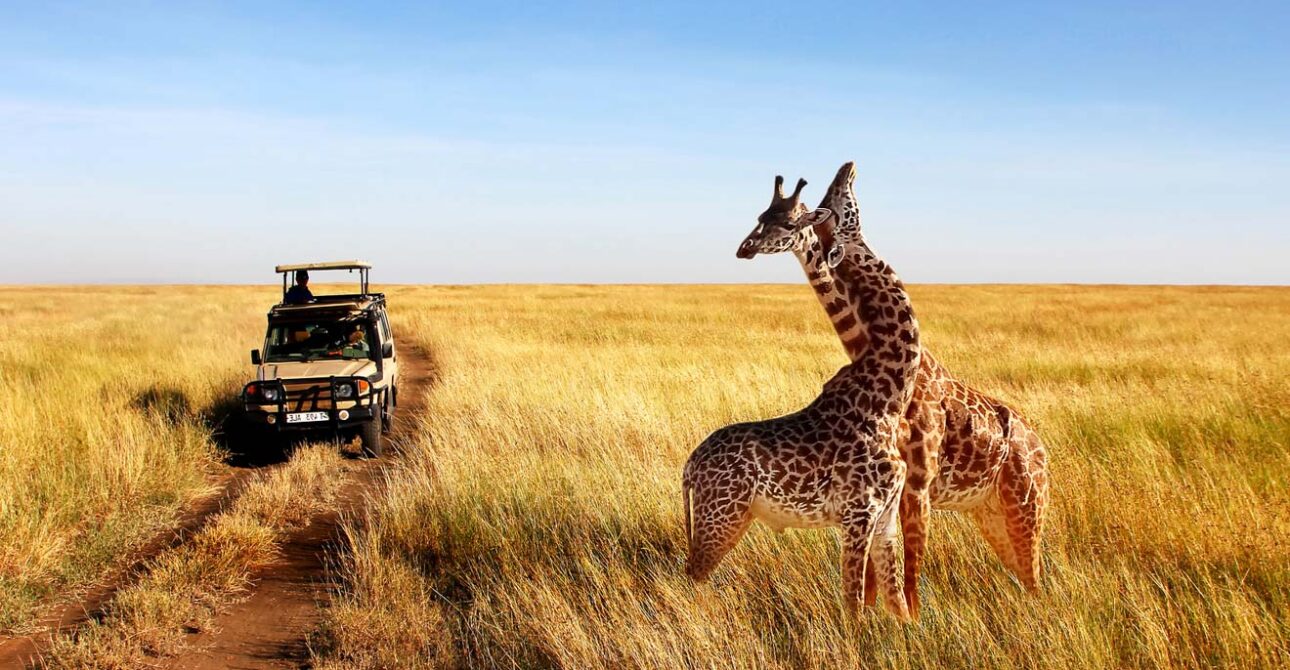
If you are planning a safari, you can almost count on seeing the Serengeti National Park giraffe.
The Masai giraffe is the tallest land animal.
You will often spot one within an hour of entering the gates.
The serengeti national park in africa is famous for its giraffes.
This is the short answer.
Serengeti giraffes are Masai giraffes, recognizable by jagged, vine-leaf-shaped patches on a dark background.
They favor acacia woodlands and open savanna, especially around Seronera, Moru Kopjes, and the northern Kogatende area.
Sightings are reliable year-round.
Conservation status is the sobering part: the Masai giraffe is listed as Endangered.
It is also found in serengeti national park in africa.
Below, we cover how to tell Masai giraffes apart, their behavior, the best areas and seasons to find them, and what protects them. As a Tanzania-based operator, we guide these drives every week, so we also share practical tips for getting your best photos.
Why Serengeti giraffes matter on a safari
A dependable sighting that sets the tone
Giraffes are the most dependable big animal you will meet in the Serengeti. Lions hide in grass and leopards sleep in trees, but a Masai giraffe stands up to 18 feet tall and shows up on the skyline from a mile away. Most guests on our drives check off their first one within hours, and that early win calms anyone worried about a “no-show” safari.
Spotting them also helps you spot everything else. Because giraffes see far over the brush, a group staring hard in one direction often means a lion, hyena, or cheetah is on the move. Ask your guide to stop and scan the same line. We have found predators this way more times than we can count.
What a giraffe encounter gives you
Beyond the checklist, a giraffe sighting rewards patience. These animals are calm and slow, so you get time to watch real behavior instead of a quick glimpse. Here is what you can expect to see:
- Feeding: a tongue about 18 inches long wrapping around thorny acacia branches.
- Necking: males swinging their heads and necks in slow, heavy duels over females.
- Calves: newborns, often under 6 feet tall, staying close to their mothers.
- Photography: long-necked silhouettes against acacia trees at sunrise and sunset.
There is a bigger reason to pay attention, too. The Serengeti Masai giraffe is listed as Endangered, and its numbers have fallen sharply across East Africa over the past three decades. Poaching for meat, habitat loss, and shrinking range outside protected areas have all played a part.
Seeing a Serengeti giraffe is easy, but the species behind that sighting is Endangered.
Your park fees help fund the ranger patrols and habitat protection that keep these herds standing. So when you watch a giraffe browse beside your vehicle, you are looking at a highlight of your trip and a species that benefits directly from responsible safari tourism.
How to spot giraffes in the Serengeti
Scan the treetops, not the ground
Finding a Serengeti National Park giraffe is mostly a matter of looking up. Scan the acacia canopy for a head or a pair of small horns poking above the branches, and watch for tan patches that look like part of the trunk. Your guide will sweep the horizon with binoculars first, then work inward.
Look up before you look out, because giraffes show above the trees long before they show on the ground.
Timing matters too. Early morning and late afternoon are when giraffes feed hardest, so you get the most movement and the best light. At midday they often stand motionless in shade, which makes them harder to pick out.
A quick spotting checklist
Once you know the basics, a few habits will raise your odds and keep the animals relaxed while you watch them:
- Check isolated acacias and tall trees along seasonal riverbeds.
- Look for a second and third giraffe nearby, since herds are loose groups of three to ten.
- Ask your driver to switch off the engine, because quiet vehicles get closer views.
- Bring 8×42 binoculars so you can study markings from 100 yards away.
Where giraffes live across the Serengeti regions
Giraffes live where the trees are, so finding them means knowing the park’s woodland zones. Each herd tends to stay within a familiar home range, which is why a spot that holds giraffes in June usually still holds them in October.
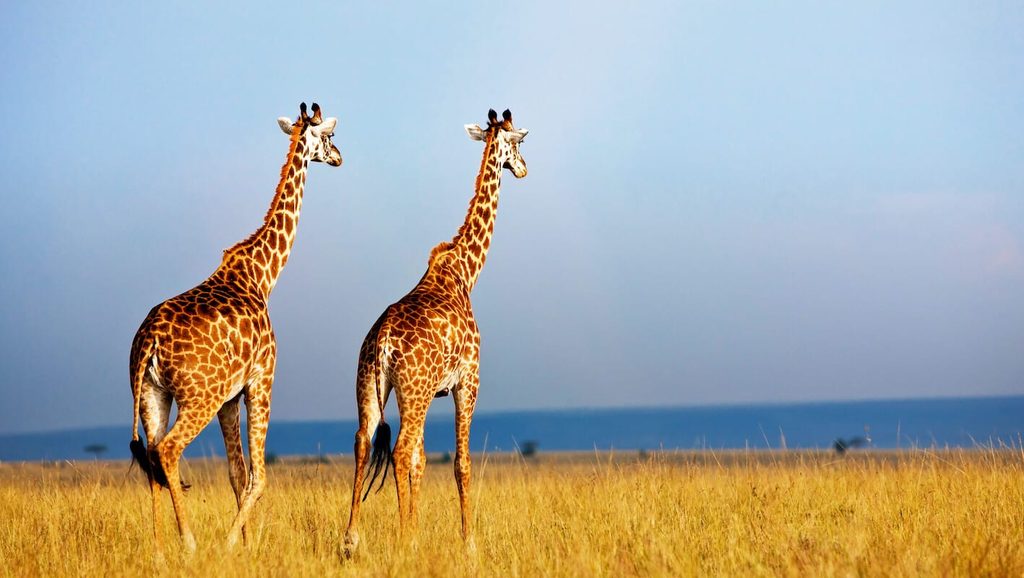
Best regions at a glance
The central and northern sectors give you the most reliable sightings of the Serengeti National Park giraffe. This table shows where to focus.
| Region | Habitat | Giraffe sightings |
|---|---|---|
| Seronera | Acacia woodland, river valleys | Most reliable, year-round |
| Moru Kopjes | Rocky outcrops, scattered acacia | Good, often near the rocks |
| Kogatende (north) | Hills, woodland, Mara River | Frequent, with quieter roads |
| Western Corridor | Grumeti River forest | Good along the riverbanks |
| Southern plains | Short grass, few trees | Scarce |
Where giraffes are scarce
The open short-grass plains around Ndutu hold far fewer giraffes, because there is little to browse above the grass. Most guests come here for Great Migration calving season in the early months of the year, so expect wildebeest and predators instead.
Plan your route around trees. If giraffes matter to you, base your game drives in Seronera or Kogatende and ask your guide to work the riverbeds first.
Where the acacias thin out, the giraffes do too.
Masai giraffe facts, behavior and conservation status
Quick facts
The Masai giraffe (Giraffa tippelskirchi) is the largest giraffe species and Tanzania’s national animal. Any Serengeti National Park giraffe you meet has jagged, vine-leaf patches that run down to the legs.
| Trait | Masai giraffe |
|---|---|
| Weight | Males up to 4,250 lb, females up to 2,600 lb |
| Neck bones | 7 vertebrae, the same count as humans |
| Pregnancy | About 15 months, usually one calf |
| Lifespan | Around 25 years in the wild |
| Sleep | Short naps, often under 2 hours a day |
Behavior and conservation
Giraffes live in loose, shifting herds with no fixed leader. Mothers often leave calves together in a small group while they feed, and lions take many calves in the first months, so adults stay alert.
Wild numbers tell a harder story. The IUCN lists the Masai giraffe as Endangered after a drop of roughly 50 percent in three decades, leaving about 35,000 animals, most of them in Tanzania. Poaching and farmland that cuts off roaming routes drive the decline, and protected parks are where herds hold steadiest.
Protected parks like the Serengeti are the Masai giraffe’s best hope.
You can help simply by booking with operators that follow park rules, keep distance, and never chase animals for a photo.
What to do and what to pack for giraffe sightings
What to do during the sighting
A relaxed Serengeti National Park giraffe keeps feeding, while a startled one walks off. So stay inside the vehicle and keep your voice low. Standing in the roof hatch is fine when your guide allows it, but sudden movement is not.
Stay seated and stay quiet, and the giraffes will carry on feeding.
Patience pays off here. Wait 15 to 20 minutes and a wary herd often crosses the track in front of you. Ask your guide to park with the sun behind you, which gives you clean light on the markings and fewer harsh shadows.
What to pack
Dress for dust, glare, and cold dawns. Neutral layers blend in and hide dirt, and a telephoto lens lets you fill the frame without leaning out toward the animals. Here is the short list we hand to every guest, and our full Tanzania safari packing list covers the rest:
- Telephoto lens (200 to 400 mm) and a beanbag for steady shots
- Spare batteries and memory cards, because you will shoot more than you expect
- Olive or khaki layers, plus a fleece for 6 a.m. starts
- Wide-brim hat, sunglasses, and SPF 30+ sunscreen
- A dust buff or light scarf for dry-season roads
Planning your giraffe sightings
The Serengeti National Park giraffe is the easiest big animal to find and one of the most worth protecting. Masai giraffes show up year-round, with the best odds around Seronera, Moru Kopjes, and Kogatende, where acacia woodland gives them plenty to browse. Go out at dawn and dusk, scan the treetops, and stay quiet in the vehicle.
Your park fees and booking choices matter too. The Masai giraffe is listed as Endangered, so choose an operator that follows park rules and keeps a respectful distance, because responsible tourism helps keep these herds standing.
Ready to see them for yourself? Tell us your dates and budget, and we will build a route that puts you in giraffe country. Every trip is 100% tailor-made, and you can plan your Serengeti safari with us and ask for a free quote today.