Planning a safari in Tanzania and Kenya means choosing between dozens of tours that look almost identical online.
However, most tours list the Masai Mara and the Serengeti, then differ in border logistics, lodge quality, and price.
You need to know which ones are worth your time, serengeti national park in africa.
Here is the short answer. The best Kenya Tanzania safari combines the Masai Mara with the Serengeti and Ngorongoro Crater over 8 to 12 days. Expect roughly $2,500 to $9,000 per person, depending on lodges and whether you fly or drive between parks. The Great Migration (July to October) is the prime window, but January to March also delivers calving season with fewer vehicles.
Below, you’ll find 10 tours and itineraries, from budget group departures to private flying safaris. Additionally, we run safaris and Kilimanjaro treks from Moshi and Arusha. Our guides tailor insights to different budgets and schedules. This helps you plan with confidence.
We explain what each route involves on the ground. Then, each entry covers length, cost, and who it suits. Moreover, you can compare packages and request a quote with confidence. Each entry details length, cost, and suitability. This clarity helps you compare options quickly.
This helps you choose options for the serengeti national park in africa. Our itineraries cover logistics, timing, and what is included. You can request a quote with clear terms. We present each option with practical details and expected experiences. Everything is written in plain language for easy comparison.
How a combined Kenya and Tanzania safari works
One ecosystem, two countries
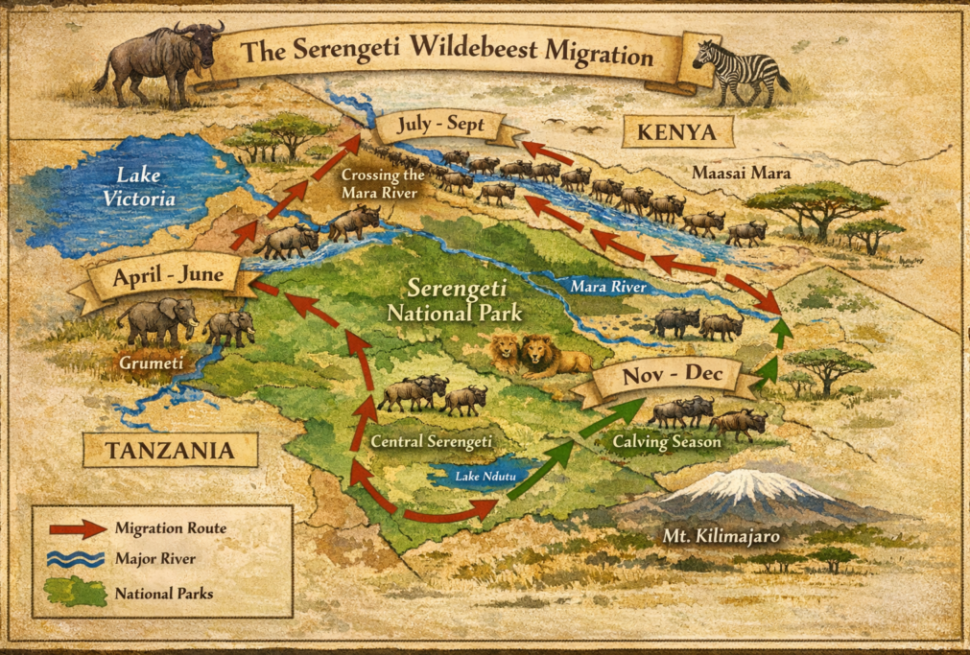
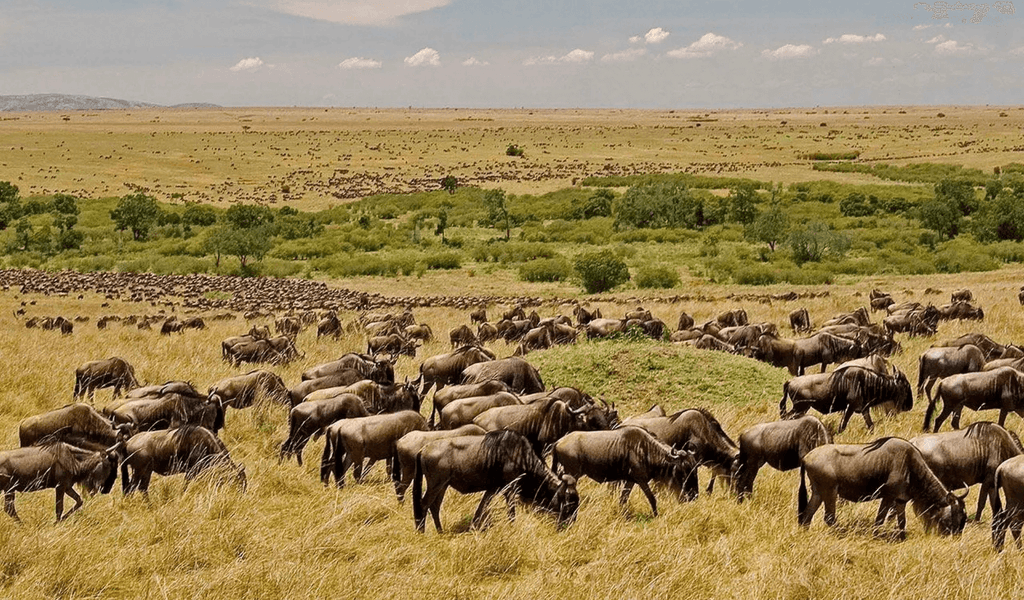
A Kenya Tanzania safari is really one journey through a single ecosystem. The Masai Mara in Kenya and the Serengeti in Tanzania are joined, and the border is only a line on the map. Wildlife crosses it freely. You cross it with a passport, a visa, and a change of vehicle.
Most Tanzania and Kenya safari packages run in one direction. You land in Nairobi, spend 2 to 4 days in the Mara, then cross into Tanzania for the Serengeti, Ngorongoro Crater, and sometimes Tarangire or Lake Manyara. You fly home from Kilimanjaro (JRO) or Arusha. An open-jaw ticket, arriving in one city and leaving from another, saves you a long backtrack.
Plan one border crossing, not two, and build the whole itinerary around it.
Overland or by air
The border is where tours differ most. You can drive across or fly, and the choice shapes your budget and your days in the parks.
| Option | Typical route | Travel time | Best for |
|---|---|---|---|
| Overland | Nairobi to Arusha via Namanga, or Mara to Serengeti via Isebania and Sirari | 6 to 10 hours plus 1 to 2 hours at the border | Budget and group trips |
| Flight | Mara airstrip to Serengeti airstrip, usually with a connection or a charter | 1 to 3 hours | Luxury and short trips |
Driving costs less, but it eats most of a day. Flying saves that day for game drives, and it adds hundreds of dollars per person. Either way, expect to swap vehicles and driver-guides at the border, because each country’s operators generally run game drives in their own parks. A good operator arranges that handover so you never stand at a gate waiting for a ride.
1. Climb Kilimanjaro and Safaris custom Kenya and Tanzania safari
Itinerary and route
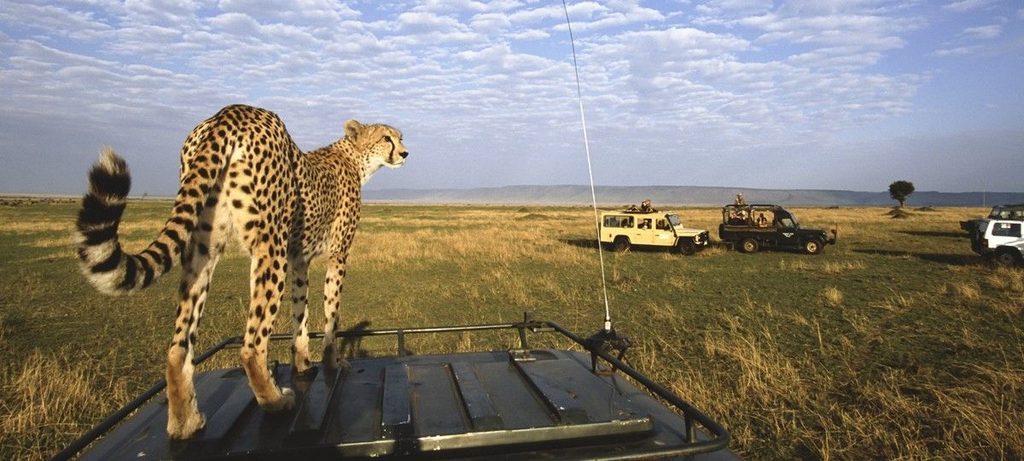
Our custom safari in Tanzania and Kenya is 100% tailor-made, so the route follows your dates and interests. A typical 9-day plan looks like this:
- Days 1 to 3: Nairobi arrival, then Masai Mara game drives
- Day 4: Border crossing and driver-guide handover
- Days 5 to 6: Central Serengeti
- Day 7: Ngorongoro Crater
- Day 8: Tarangire National Park
- Day 9: Fly home from Kilimanjaro (JRO)
Our local team arranges the border handover, so you never wait at a gate.
Who it’s for
Couples, families, and solo travelers fit best, especially if you want your own pace and your own lodge choices. We run it as a private trip, with budget through luxury accommodation.
Climbers can add a Kilimanjaro trek first, because we operate both treks and safaris from Moshi and Arusha.
Price and what’s included
Pricing depends on lodges, group size, and whether you fly the border. Most custom trips land between $2,500 and $9,000 per person, and the quote is free. Your quote typically covers:
- Park and conservation fees
- Private 4×4 with a driver-guide in each country
- Lodge or camp nights and meals
- Airport and border transfers
- 24/7 assistance during the trip
Best time to book
Book four to six months ahead for July to October, because Mara lodges fill first. For January to March calving season, about three months is usually enough.
Shoulder months like June and November bring lower rates and fewer vehicles, though rain can start in November.
2. 10-day Masai Mara, Serengeti and Ngorongoro classic
Itinerary and route
This is the benchmark among Kenya and Tanzania safari tours, and most operators sell a version of it. It gives each park enough time without rushing the border.
- Day 1: Arrive in Nairobi
- Days 2 to 4: Masai Mara game drives
- Day 5: Cross at Isebania and Sirari, then northern Serengeti
- Days 6 to 7: Central Serengeti
- Day 8: Drive to the Ngorongoro rim
- Day 9: Crater descent, then Arusha
- Day 10: Fly home from Kilimanjaro (JRO)
Three nights in each park beats four nights in one and a rushed look at the other.
Who it’s for
First-time visitors get the most from this plan. You see the Big Five, the Mara River, the Serengeti plains, and the crater floor without repeating the same landscape.
Expect long driving days on days 5, 8, and 9. It suits you if you can handle several hours in a 4×4 on rough roads, and it works well for couples, friends, and families with teens.
Price and what’s included
Mid-range lodges put this trip at about $4,500 to $6,500 per person with two travelers sharing. Budget camping versions start lower, and luxury camps push past $8,000. A typical price covers:
- Park and conservation fees in both countries
- Private 4×4 with a driver-guide in each country
- Lodge or camp nights with meals
- Crater entry and airport transfers
International flights, visas, and tips are extra.
Best time to book
Aim for late July to October if you want Mara River crossings, and reserve four to six months ahead. The crater itself works year-round, because its animals stay put.
For January to March, ask for southern Serengeti nights instead of the north. That is where the calving herds gather.
3. 7-day Masai Mara and Serengeti highlights
Itinerary and route
This is the short version of the classic, and it drops Ngorongoro to keep the pace sane. You get two nights in the Mara and two in the Serengeti, with one border crossing on day 4.
- Day 1: Arrive in Nairobi
- Days 2 to 3: Masai Mara game drives
- Day 4: Cross at Isebania and Sirari, then northern Serengeti
- Days 5 to 6: Central Serengeti
- Day 7: Fly from Seronera to Arusha, then home via Kilimanjaro (JRO)
Seven days works only if you skip the crater and cross the border once.
Who it’s for
Travelers with only one week of leave get the most from this plan. Among safari tours in Kenya and Tanzania, it is the best fit if the Mara River and the Serengeti plains matter more to you than the crater floor.
Skip it if long drives bother you. Day 4 is a full day on the road, so ask for a flight over the border if you can spend the extra money.
Price and what’s included
Expect about $3,200 to $4,800 per person with two sharing, using mid-range lodges. Most Kenya and Tanzania safari packages at this length cost less than the 10-day classic, mainly because you pay for fewer nights. Flying the border or sleeping in luxury camps adds $800 or more. Your price normally covers:
- Park and conservation fees in both countries
- Private 4×4 with a driver-guide in each country
- Lodge or camp nights with meals
- Airport transfers and the border handover
International flights, visas, and tips are extra.
Best time to book
Reserve four to six months ahead for late July to October, because Mara River crossings fill lodges fast. For January to March, ask for southern Serengeti nights so you land among the calving herds. With only two nights per park, a rainy week costs you real game-viewing time, so avoid April and May.
4. 8-day Kenya and Tanzania budget group-joining safari
Itinerary and route
This group-joining safari shares one 4×4 with a few other travelers on fixed departure dates. It keeps the classic route of most Kenya Tanzania safari tours and trims the extras.
- Day 1: Arrive in Nairobi
- Days 2 to 3: Masai Mara shared game drives
- Day 4: Cross at Isebania and Sirari, then northern Serengeti
- Day 5: Central Serengeti game drives
- Day 6: Drive to the Ngorongoro rim
- Day 7: Crater descent, then Arusha
- Day 8: Fly home from Kilimanjaro (JRO)
Who it’s for
Backpackers, solo travelers, and couples watching their budget get the best value here. You also meet other travelers, which many solo travelers enjoy.
Expect trade-offs, though. Dates are fixed, lodges and camps are basic, and the group sets the pace. Skip it if you want private game drives or lazy mornings.
Price and what’s included
Plan on $2,500 to $3,300 per person, well below a private trip of the same length. You save by sharing the vehicle, not by skipping parks.
- Park and conservation fees in both countries
- Shared 4×4 with a pop-up roof and a driver-guide
- Camping or budget lodge nights with meals
- Crater entry and airport transfers
Group joining cuts cost by splitting the vehicle, not by cutting parks.
Flights, visas, and tips are extra.
Best time to book
Choose a departure from late July to October for Mara River crossings. Fixed-date seats sell out, so book four months ahead.
January to March works well too, with calving herds and fewer vehicles. Avoid April and May, when heavy rain turns camp roads to mud.
5. Great Migration safari across the Mara River
Itinerary and route
This 8-day plan is built around the Mara River crossings, so it puts most of your nights near the river. You work both banks instead of racing between parks.
- Day 1: Arrive in Nairobi
- Days 2 to 4: Masai Mara, with river-bank game drives
- Day 5: Cross at Isebania and Sirari, then Kogatende in northern Serengeti
- Days 6 to 7: Northern Serengeti, on the Tanzanian side of the river
- Day 8: Fly from Kogatende to Arusha, then home via Kilimanjaro (JRO)
Crossings are never scheduled, so more days at the river means better odds.
Who it’s for
Photographers and wildlife lovers who want the Great Migration above everything else should pick this one. It is the best African safari Tanzania Kenya route if a single scene matters more than ticking off parks.
Patience is required. Herds can stand at the bank for hours before they jump, and some days they turn back. Expect crowded viewpoints in August, and skip this trip if you hate waiting.
Price and what’s included
Peak-season rates apply. Plan on $4,800 to $7,500 per person with two sharing, using mid-range tented camps. Camps right on the river cost more. Your price normally covers:
- Park and conservation fees in both countries
- Private 4×4 with a driver-guide in each country
- Tented camp nights with meals
- Airport transfers and the border handover
Flights, visas, and tips are extra.
Best time to book
Target late July to October, with August and September the most reliable for crossings. Reserve six to nine months ahead, because river camps sell out first.
Herd movements follow the rains, so ask your operator where the animals are a few weeks before you travel.
6. Amboseli, Tsavo and Tarangire elephant safari
Itinerary and route
This route skips the Mara and the Serengeti and follows the elephants through southern Kenya and northern Tanzania. It crosses at Taveta and Holili, a quieter border than Isebania, and it ends a short drive from Moshi.
- Day 1: Arrive in Nairobi
- Days 2 to 3: Amboseli, with Kilimanjaro behind the herds
- Day 4: Tsavo West game drives
- Day 5: Cross at Taveta and Holili, then overnight in Moshi
- Days 6 to 7: Tarangire National Park
- Day 8: Fly home from Kilimanjaro (JRO)
Elephants are the headline here, so travel when the rivers run low.
Who it’s for
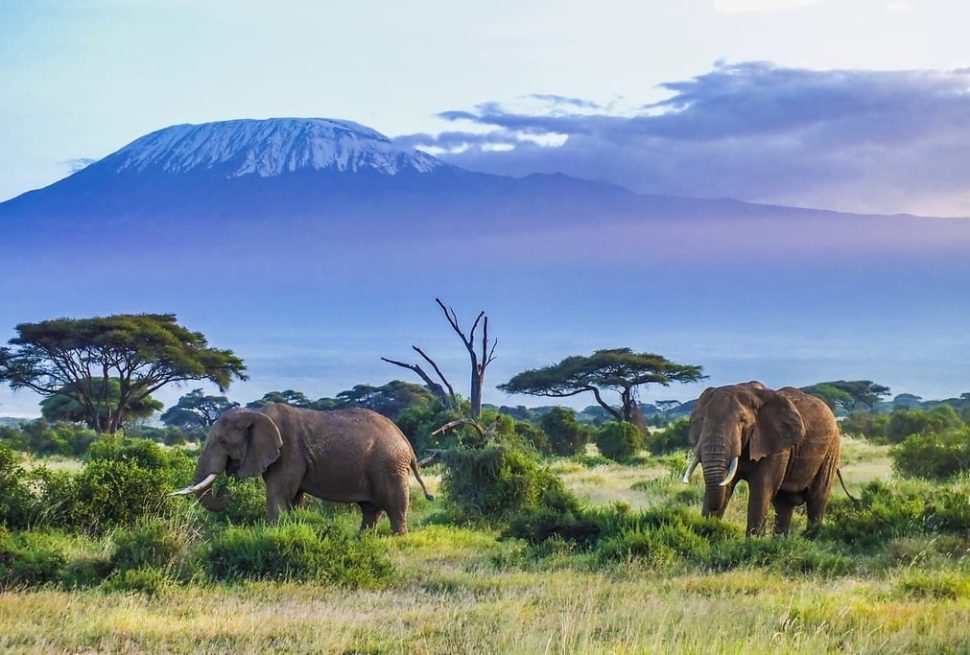
Elephant lovers and photographers get the most from this plan. Amboseli’s open plains put huge herds in front of the mountain, and Tarangire’s baobabs make a strong second act. Repeat visitors who have already done the Mara like it too.
Expect trade-offs. There are no river crossings, and Tsavo’s thick bush makes lions harder to find. This is a great fit for climbers who want a gentler safari after a Kilimanjaro trek.
Price and what’s included
Plan on $2,800 to $5,200 per person with two sharing. Among Tanzania Kenya safari packages, it costs less than the Mara and Serengeti routes because the parks are cheaper and you skip peak-season camps. Your price normally covers:
- Park and conservation fees in both countries
- Private 4×4 with a driver-guide in each country
- Lodge nights with meals
- Airport transfers and the border handover
Flights, visas, and tips are extra.
Best time to book
Travel from June to October, when elephants crowd the Amboseli swamps and the Tarangire River. Tarangire peaks from August to October. Book three to four months ahead, and skip April and May, when rain closes park tracks.
7. Luxury flying safari between Kenya and Tanzania
Itinerary and route
This 8-day plan replaces every long drive with a bush flight, so you get more hours on game drives and none on the road. It is the most comfortable way to do a safari in Tanzania and Kenya if the border day usually worries you.
- Day 1: Arrive in Nairobi, then fly to the Masai Mara
- Days 2 to 4: Private game drives from a small tented camp
- Day 5: Charter flight to the Serengeti, with immigration cleared at the airstrip
- Days 6 to 7: Central Serengeti camp
- Day 8: Fly to Arusha, then home via Kilimanjaro (JRO)
Flying buys you a full extra day of game viewing, not just comfort.
Who it’s for
Honeymooners, anniversary couples, and anyone with a tight schedule and a generous budget get the most from this trip. You sleep in camps of 6 to 12 tents, and you share the wildlife with very few other vehicles.
Weight limits matter. Bush planes cap luggage at about 33 pounds in soft bags only, so pack light and leave the hard suitcase in Nairobi.
Price and what’s included
Plan on $7,500 to $12,000 per person with two sharing. Most of the premium pays for internal flights and camps inside private concessions, so these luxury Kenya and Tanzania safari packages run roughly double the classic. Your price normally covers:
- All internal flights and airstrip transfers
- Park and conservation fees
- Private 4×4 with a driver-guide
- Luxury camp nights with meals and drinks
Best time to book
Book six to nine months ahead for July to October, because small camps hold few tents and bush-flight seats sell out. Peak rates apply, but river crossings justify them.
For quieter game viewing, choose January to March. You get calving herds, lower rates, and often a private sighting all to yourself.
8. Family-friendly Kenya, Tanzania and Zanzibar safari
Itinerary and route
This 12-day plan swaps long drives for bush flights and ends on the beach. Children spend far less time in a car seat, and you still get a full safari in Tanzania and Kenya before the Zanzibar finish.
- Day 1: Arrive in Nairobi
- Days 2 to 4: Masai Mara game drives
- Day 5: Fly to the Serengeti
- Days 6 to 8: Central Serengeti
- Day 9: Fly to Zanzibar via Arusha
- Days 10 to 11: Zanzibar beach days
- Day 12: Fly home from Zanzibar
Who it’s for
Families with children aged about 6 and up get the most from it. Your private vehicle lets you stop for a dung beetle or skip a third lion sighting, which a shared van never allows.
Match the pace to your youngest traveler, not your most ambitious one.
Check age rules early. Many camps set minimum ages for game drives, and some require a private vehicle for under-12s. We pick family-ready camps for you.
Price and what’s included
Our 12-day family luxury flying safari costs about $8,870 per person, and children’s rates vary by age. That covers:
- Internal flights and airstrip transfers
- Park and conservation fees
- Private 4×4 with a driver-guide
- Family-suitable lodge or camp nights with meals
- Zanzibar beach hotel nights
Best time to book
School holidays in July, August, and December drive demand, so reserve six to nine months ahead. Zanzibar’s beaches are best from June to October and December to February. For fewer vehicles and gentler weather, travel in January or February, and avoid the April and May rains.
9. Honeymoon safari with a Zanzibar beach finish
Itinerary and route
This 11-day plan gives you eight nights on safari and three on the beach. We build it as a private honeymoon trip, so the vehicle and the pace are yours.
- Day 1: Arrive in Nairobi
- Days 2 to 4: Masai Mara, with an optional sunrise balloon flight
- Day 5: Fly or cross the border to the Serengeti
- Days 6 to 7: Central Serengeti
- Day 8: Fly to Zanzibar via Arusha
- Days 9 to 10: Beach days
- Day 11: Fly home from Zanzibar
Put the beach last, so you rest after the early mornings, not before them.
Who it’s for
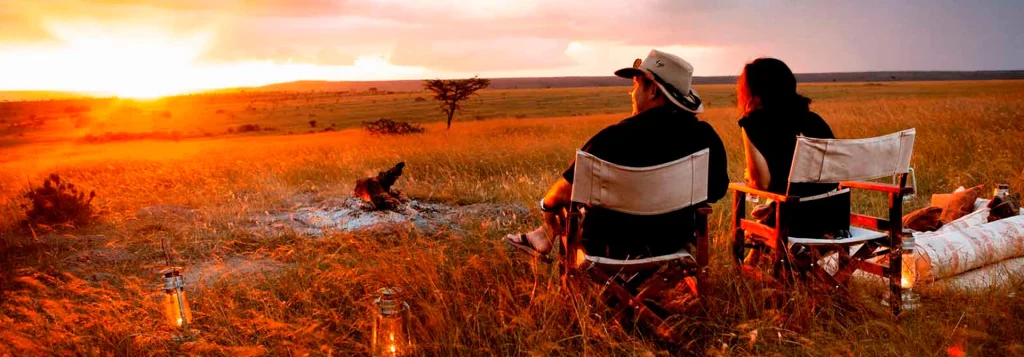
Couples celebrating a wedding or anniversary get the most from it, especially if you want privacy and a few splurges. A bush dinner or a balloon safari over the plains makes a memorable highlight. It is also a good African safari Kenya and Tanzania option if you dislike resort-only holidays.
Expect 6 a.m. starts on safari. The lie-ins begin in Zanzibar.
Price and what’s included
Plan on $5,500 to $9,500 per person with two sharing, depending on lodge level and whether you fly the border. Balloon rides and private dinners cost extra. Your price normally covers:
- Park and conservation fees
- Private 4×4 with a driver-guide in each country
- Romantic lodge or camp nights with meals
- Internal flights and Zanzibar beach hotel nights
International flights, visas, and tips are extra.
Best time to book
Pick late July to October if you want river crossings and good beach weather in one trip, and reserve six to nine months ahead. For fewer vehicles, travel in January or February, when Zanzibar is hot and calving herds fill the southern Serengeti. Avoid April and May, when heavy rain affects both the parks and the coast.
10. Kilimanjaro climb plus Kenya and Tanzania safari combo
Itinerary and route
This is the most demanding safari in Tanzania and Kenya on the list, because it starts with Africa’s highest peak. You climb first, then let the safari be your recovery. A 14-day plan runs like this:
- Day 1: Arrive at Kilimanjaro (JRO), overnight in Moshi
- Days 2 to 7: Machame or Lemosho climb
- Day 8: Rest in Moshi
- Days 9 to 11: Fly to the Serengeti for game drives
- Days 12 to 13: Cross at Sirari and Isebania, then Masai Mara
- Day 14: Fly home from Nairobi
Summit first, then safari, so your tired legs rest in a 4×4.
Who it’s for
Fit, determined travelers with two weeks free get the most from it. Our 98.5% summit success rate comes from choosing longer routes, so pick Lemosho if you want better acclimatization.
Few Tanzania and Kenya safari packages include a summit, which is why we built this one. Skip it if you have heart, lung, or knee problems, and see a doctor before you book.
Price and what’s included
Expect about $5,000 to $8,000 per person with two sharing. Our Kilimanjaro and Serengeti combos alone run $3,250 to $4,360, and the Mara adds days and a border handover. It typically covers:
- Park fees, guides, porters, and mountain meals
- Moshi hotel nights before and after the climb
- Private 4×4 with a driver-guide in each country
Flights, visas, tips, and gear rental are extra.
Best time to book
Climb in January to March or June to October, the two dry windows. For the Great Migration, choose late July to October. Reserve six to nine months ahead, because climb dates and Mara lodges both fill early. Avoid April and May, when mountain trails turn slick.
Kenya vs Tanzania: which is better for you?
Where each country wins
Neither country beats the other outright. Kenya wins on flexibility and variety, while Tanzania wins on scale and space. The table shows the differences that matter when you pick a safari tanzania Kenya route.
| Factor | Kenya | Tanzania |
|---|---|---|
| Park size | Masai Mara, about 580 sq mi | Serengeti, about 5,700 sq mi |
| Driving rules | Private conservancies allow night drives, walking safaris, and off-road tracking | National parks restrict off-road driving and night drives |
| Signature sights | Mara River crossings, Amboseli elephants, Samburu | Ngorongoro Crater, Tarangire baobabs, central Serengeti plains |
| Crowds | Mara is busiest in August | Space spreads vehicles out, except at the crater |
| Add-ons | Nairobi, Laikipia | Kilimanjaro, Zanzibar |
How to decide
Choose Kenya if you want night drives and walking safaris, or a shorter trip with easy Nairobi flights. Choose Tanzania if you want empty plains and the crater, or if a Kilimanjaro climb or Zanzibar beach is part of the plan. Both countries have excellent guides, so the guide matters more than the flag.
Kenya and Tanzania are not rivals, they are two halves of one ecosystem.
Combining them costs more and adds a border day. It also shows you both sides of the same migration. With eight days or more, we recommend a Kenya Tanzania safari that uses each country for what it does best. With less than a week, pick one country and stay put. Most Tanzania Kenya safari tours we plan for first-timers split nights roughly evenly between the Mara and the Serengeti.
How much a Kenya and Tanzania safari costs
Price by travel style
Safari budget is the first decision, and the tours above already show the spread. Kenya and Tanzania safari packages fall into four bands per person, based on two travelers sharing and excluding international flights.
| Style | Typical length | Price per person |
|---|---|---|
| Budget group-joining | 7 to 8 days | $2,500 to $3,300 |
| Mid-range private | 7 to 10 days | $3,200 to $6,500 |
| Safari plus Zanzibar or Kilimanjaro | 11 to 14 days | $5,000 to $9,500 |
| Luxury flying | 8 to 12 days | $7,500 to $12,000 |
What moves the total
Season matters most. Peak rates from July to October cost noticeably more than January to March, and river camps charge the highest premium. Lodge level comes next, since a tented camp inside a private concession can cost several times a basic lodge. Flying the border instead of driving adds hundreds of dollars per person, but it buys back a full day of game drives.
Group size helps too. A private 4×4 split between four people costs far less per head than the same vehicle with two.
What the quote leaves out
Read the inclusions line by line. Most Kenya Tanzania safari packages cover park fees, vehicles, lodging, and meals. International flights, visas, travel insurance, and tips for your driver-guide and camp staff are usually extra. Set aside roughly $300 to $500 per person for tips, visas, and drinks.
The cheapest quote is rarely the cheapest trip, so compare what each price actually includes.
Send us your dates and budget, and we’ll price two or three versions side by side, free of charge.
Best time to visit Kenya and Tanzania
Season by season
The best month for a safari in Tanzania and Kenya depends on what you want to see. June to October is the dry season, when animals crowd around water and the grass is short. January to March is the runner-up.
| Months | Conditions | What you get |
|---|---|---|
| Jan to Mar | Short dry spell | Calving herds in the southern Serengeti, fewer vehicles |
| Apr to May | Long rains | Lowest rates, muddy roads, some camps close |
| Jun to Oct | Main dry season | Mara River crossings, peak game viewing, peak prices |
| Nov to Dec | Short rains | Green landscapes, birdlife, lower rates |
How to pick your month
Pick late July to September if river crossings are your priority, and book early, because lodges fill first. You pay peak rates and share viewpoints with other vehicles.
Choose your month by the scene you want, then plan the border crossing around it.
Travel in January or February if you prefer space and a lower price. Calving season brings predators to the southern plains, and you often get sightings to yourself. Shoulder months like June and November also work, though November rain can slow the roads. Skip April and May unless price is your only concern.
Border crossings, visas and vaccinations
Crossing the border
Every safari in Tanzania and Kenya crosses one border, by road or by air. The busy overland posts are Isebania and Sirari for the Mara and Serengeti, and Namanga for Nairobi and Arusha. Your passport needs six months of validity and at least two blank pages.
Allow one to two hours for formalities. Your driver-guide handles the vehicles and luggage, but you walk through immigration yourself, so keep your documents in a daypack.
Visas and entry permits
Both countries now use online systems. Kenya replaced visas with an electronic travel authorization (eTA), and Tanzania offers an e-visa you can get before you fly. Fees below are for US citizens and change often, so confirm them on each government’s official site.
| Country | Document | Typical cost | How to get it |
|---|---|---|---|
| Kenya | eTA | About $30 | Online, a week before travel |
| Tanzania | Tourist e-visa | About $100 | Online, or on arrival at the border |
Apply for both documents online before you fly, not at the border.
Print your approvals and keep them with your passport. Queues at land borders move slowly, and printed paperwork speeds up every step.
Vaccinations and health
Tanzania can ask for a yellow fever certificate when you arrive from Kenya, because Kenya is a yellow fever risk country. Carry the yellow card even if nobody asks for it.
Malaria is the bigger daily risk. Book a travel clinic visit six to eight weeks before departure to discuss malaria tablets, typhoid, and hepatitis A. Buy travel insurance that covers medical evacuation, since bush clinics are far from the nearest hospital.
How to choose a tour operator and book
What to check before you pay
Any operator can post a polished itinerary, so look for proof of who actually runs the trip. Many companies resell the same Kenya and Tanzania safari tours and add a markup without adding service. Ask whether their own guides and vehicles cover both countries, and who handles the border handover.
Check these before you send a deposit:
- Reviews on TripAdvisor, Google, and Trustpilot, read for named guides rather than star averages
- A written inclusions list covering park fees, flights, and the border day
- Current local tourism licenses
- Clear terms on deposits, cancellations, and refunds
- A guaranteed window seat for every traveler in the 4×4
A good operator answers every question in writing before you pay a deposit.
How to book
Booking a safari in Tanzania and Kenya takes about four steps, and most travelers finish them in a week or two. Start four to nine months ahead if you want July to October.
- Send your dates, budget, group size, and must-see sights by WhatsApp or email.
- Compare two or three written quotes line by line, not just the totals.
- Pay the deposit once the route is fixed, and note the date the balance is due.
- Share passport details for permits and flights, then apply for your Kenya eTA and Tanzania e-visa.
Quotes from us are free, and your consultant, Stanley Ayo, plans each trip personally. Ask for a call or a WhatsApp chat if you want to talk through the border options before you decide.
Choosing the right safari for you
The best safari in Tanzania and Kenya is the one that fits your dates, budget, and patience for travel days. Pick the Great Migration route if river crossings matter most, a group-joining trip if cost matters most, and a flying safari if time matters most. Families, honeymooners, and climbers each have a plan above that suits them.
Whatever you choose, keep the basics in mind. Cross the border once, apply for your Kenya eTA and Tanzania e-visa online, and compare quotes by what they include, not by the total. Book four to nine months ahead for July to October.
Ready to turn a shortlist into a route? Request a free quote from Climb Kilimanjaro and Safaris and Stanley Ayo will plan a tailor-made Kenya and Tanzania safari with you, from budget to luxury, using any of our safari trip types.