Stepping onto East African soil for a big game adventure is an exhilarating milestone, but timing your trip correctly is naturally the first priority for any global traveler. Asking what is the best time to visit tanzania for a safari is completely normal, and the short answer is June to October—the country’s long dry season. During these months, Tanzania is widely recognized as delivering the most predictable weather, clearest skies, and most explosive wildlife viewing on earth.
📋 Topic Guide: Seasonal Planning & Wildlife Tracking
- Peak Game-Viewing Window: June to October (Thin vegetation makes animals easy to spot)
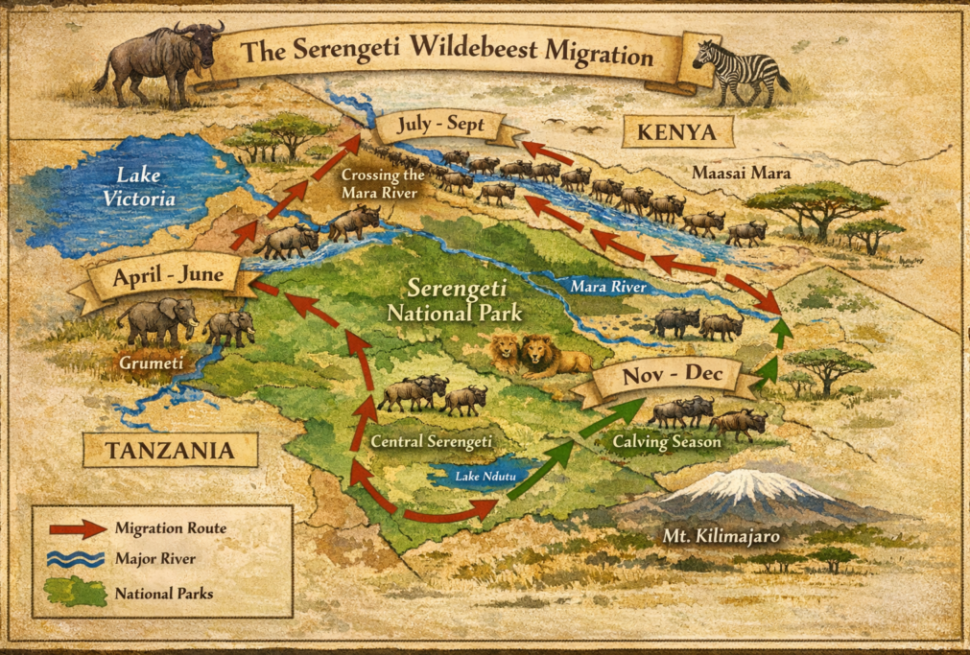
- The Migration Phenomenon: River crossings happen July–October; Calving season occurs January–March
- Main Climatic Hurdle: The heavy monsoon rains (Masika) from late March through May
- Alternative Window Perks: January to February offers lower prices, vibrant green scenery, and high predator activity
🧭 Real Expectations: Choosing Your Perfect Safari Window
To get an honest picture of the ideal time to travel, it helps to look at Tanzania’s calendar through two completely different environmental lenses: the Dry Season and the Green Season.
- The Long Dry Season (June to October): Once the rains stop, the African savannah dries out rapidly. Water becomes a scarce commodity, forcing elephants, lions, buffaloes, and massive herds of plains game to converge along permanent riverbeds and waterholes. This creates highly predictable, easily accessible wildlife viewing. There are fewer mosquitoes, the roads are dry, and the climate is pleasantly cool.
- The Green & Calving Season (January to March): This is a beautifully dynamic time of year. Rejuvenated by brief rains, the plains are lush, green, and highly photogenic. In the southern Serengeti, millions of wildebeest gather to give birth, creating a paradise for dramatic, high-stakes predator encounters.
📊 Quick-Reference Seasonality Matrix
Use this directional breakdown to align your budget, crowd tolerance, and bucket-list priorities:
| Travel Window | Safari Experience | Crowd Level & Rates | Expert Action Plan |
| June – October | Peak Big Five & River Crossings: Animals congregate at waterholes. | High Crowds / Premium Rates | Book lodges 8–12 months in advance. |
| November – December | Shoulder Season: Short, brief afternoon rains. Beautiful landscapes. | Moderate Crowds / Mid-Tier Rates | Perfect for holiday travel; bring light rain gear. |
| January – March | Wildebeest Calving: High predator action in Southern Serengeti. | Medium Crowds / Standard Rates | Target Ndutu and Ngorongoro for new life. |
| March – May | Heavy Rains: Dense foliage, muddy tracks, migratory birding. | Very Low Crowds / Budget Rates | Best for budget travelers and exclusive solo safaris. |
🗺️ 4 Core Domains of Weather and Travel Awareness
🐆 1. Tracking the Great Wildebeest Migration
The migration is a continuous, circular journey rather than a single event. If your absolute priority is seeing the dramatic Mara River crossings, you must book between mid-July and September and position your safari in Northern Serengeti. Conversely, if you want to see the birth of 8,000 calves a day and the resulting big cat hunts, focus your trip on the Ndutu Plains between January and March.
🐘 2. High-Density Resident Wildlife in Tarangire & Ngorongoro
While the Serengeti depends heavily on the migration movement, parks like the Ngorongoro Crater hold resident wildlife all year round. However, Tarangire National Park is highly seasonal; it transforms during the dry season (July to October) into an elephant stronghold, drawing thousands of elephants to the Tarangire River alongside migratory buffaloes and zebras.
🥾 3. Summiting Mount Kilimanjaro safely
True mountain safety relies heavily on clear skies and dry trails. If you are combining your safari with a Kilimanjaro climb, aim for January to March (warm and dry) or June to October (cool and dry). Avoid climbing during April and May, when heavy cloud cover, ice, and slippery mud reduce visibility and summit success rates.
🏝️ 4. Post-Safari Zanzibar Beach Logistics
The “Bush and Beach” combo is the ultimate Tanzanian holiday template. The absolute best months to lounge on Zanzibar’s pristine beaches run parallel to the safari peak season from June to October, when the Indian Ocean is calm, cool, and free of humid monsoon winds. A secondary window opens from December to February for travelers who love hot, tropical summer weather.
🔍 Insiders’ Timing Tips for a Flawless Journey
- Beat the August Crowds in September: August is the absolute peak of international travel, meaning high safari vehicle congestion at river crossings. Booking in September gives you the exact same prime dry weather and river action but with significantly fewer vehicles blocking your photography shots.
- Pack Layers for the Crater Floor: Even during the hot summer months, early morning game drives into the Ngorongoro Crater or high-altitude camps can plunge down to 8°C (46°F). Always pack a fleece jacket and a windbreaker alongside your lightweight safari khakis.
- Exploit the November “Hidden Gem” Window: If you want luxury safari properties at a fraction of the cost, look at the first two weeks of November. The short rains are minor, the parks are empty, and operators slash rates right before the Christmas rush.
- Mind the Post-2013 USD Rules: No matter what time of year you book, ensure your physical US cash bills are printed after the year 2013. Tanzanian banks and safari lodges strictly reject older currency notes due to historical counterfeiting risks.
✈️ Ready to Plan Your Route?
Now that you know the exact months to book your trip, let’s map out the movement of the animals. Check out our next comprehensive guide: