People often refer to the great migration in tanzania as the greatest wildlife show on earth.
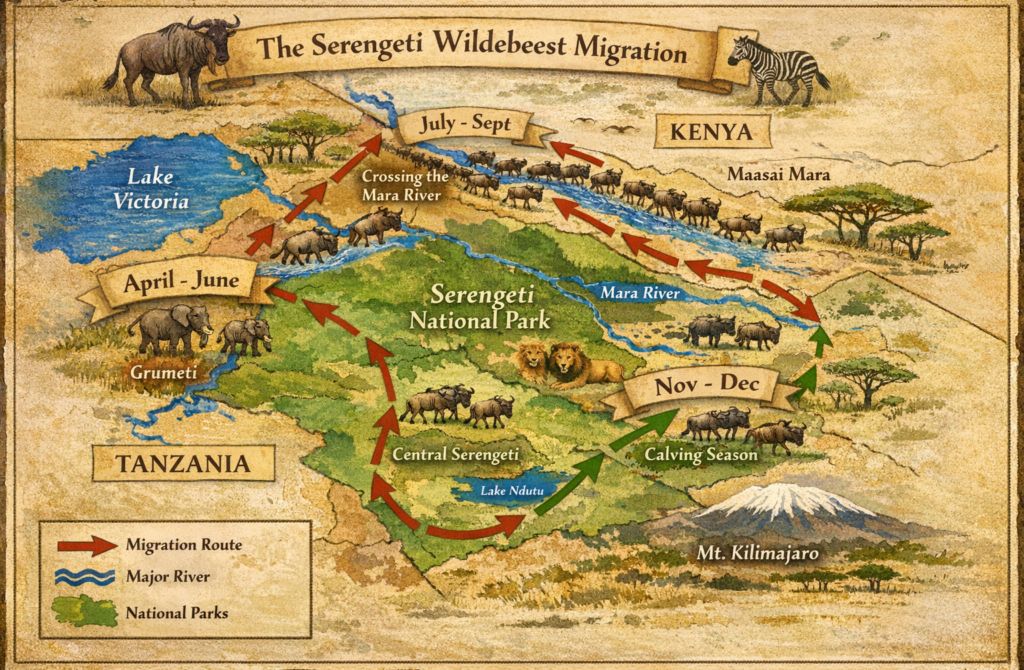
Every year, more than 1.5 million wildebeest travel an 800-kilometer circular route through the Serengeti ecosystem, accompanied by hundreds of thousands of zebras and gazelles, in search of green pastures and fresh water.
A common misconception among travelers is that the great migration in tanzania is a single event.
In reality, the migration is a year-round movement.
To see it, you must align your safari lodge with the herds’ location. Your itinerary should follow where the herds are during that month.
Here is your ultimate month-by-month guide to tracking the Great Migration in Tanzania.
📋 Topic Guide: Migration Movement & Regional Mapping
- The Dramatic River Crossings: July to October (Northern Serengeti / Mara River)
- The Synchronized Calving Season: January to March (Southern Serengeti / Ndutu Plains)
- The Trek & Mating Season: April to June (Western Corridor & Central Serengeti)
- The Return Journey: November to December (Lobeso & Central Serengeti)
🤰 January to March: The Calving Season (Southern Serengeti & Ndutu)
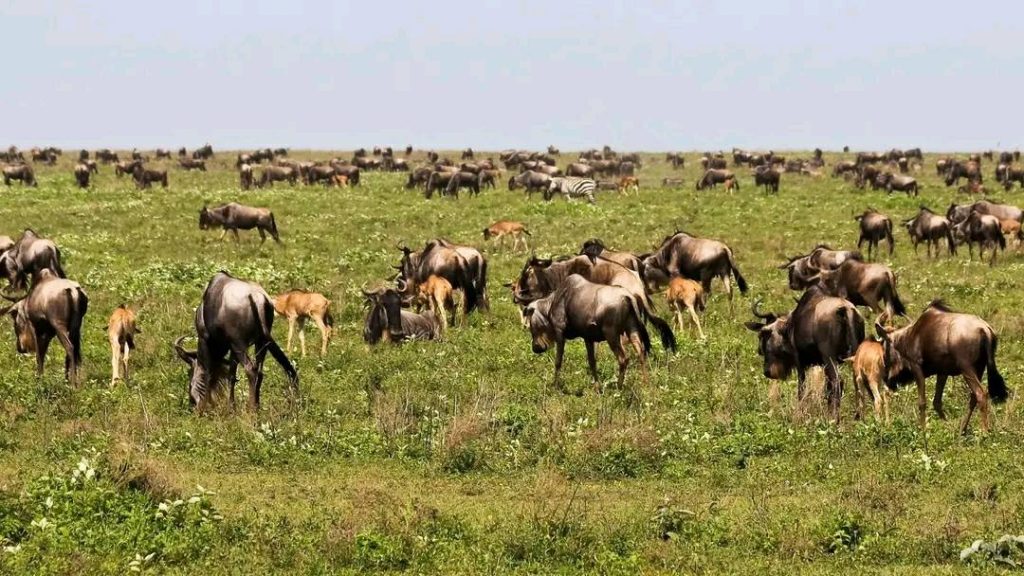
During the first few months of the year, the mega-herds settle on the short-grass plains of the southern Serengeti and the Ndutu Conservation Area, which borders the Ngorongoro.
What Happens:
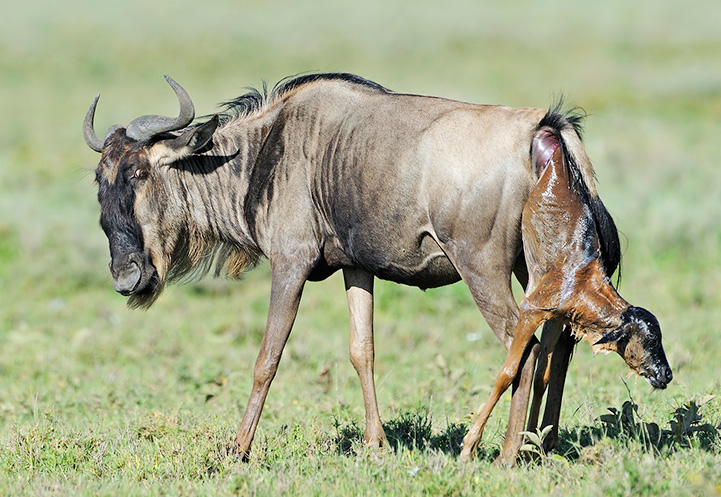
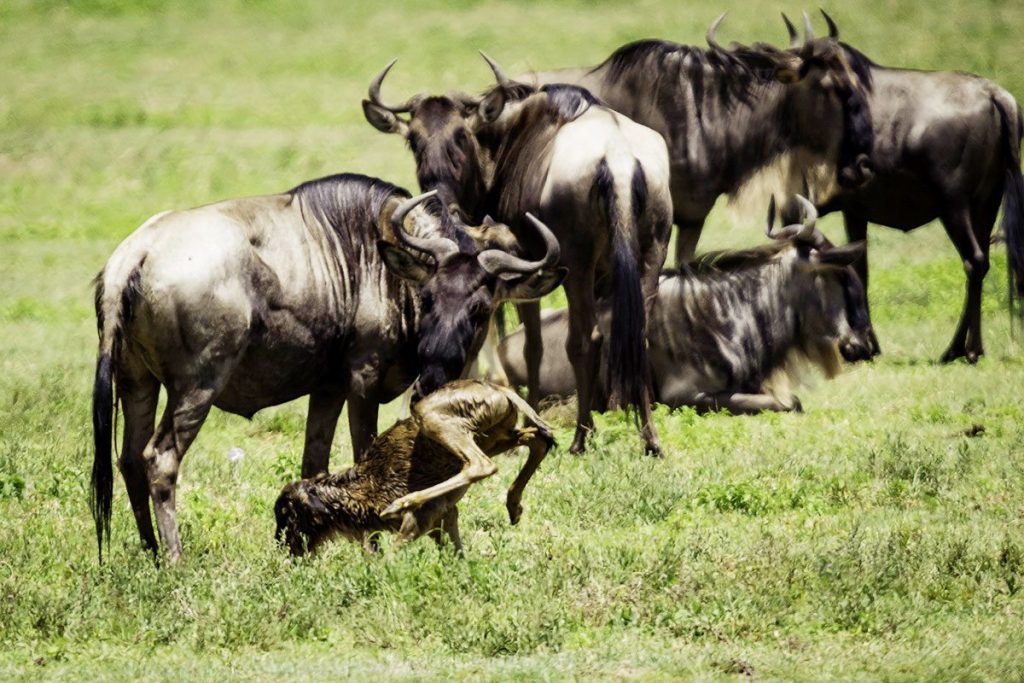
- Mass Births: This is the calving season. In a synchronized wave lasting roughly 2 to 3 weeks in February, around 8,000 wildebeest calves are born every single day.
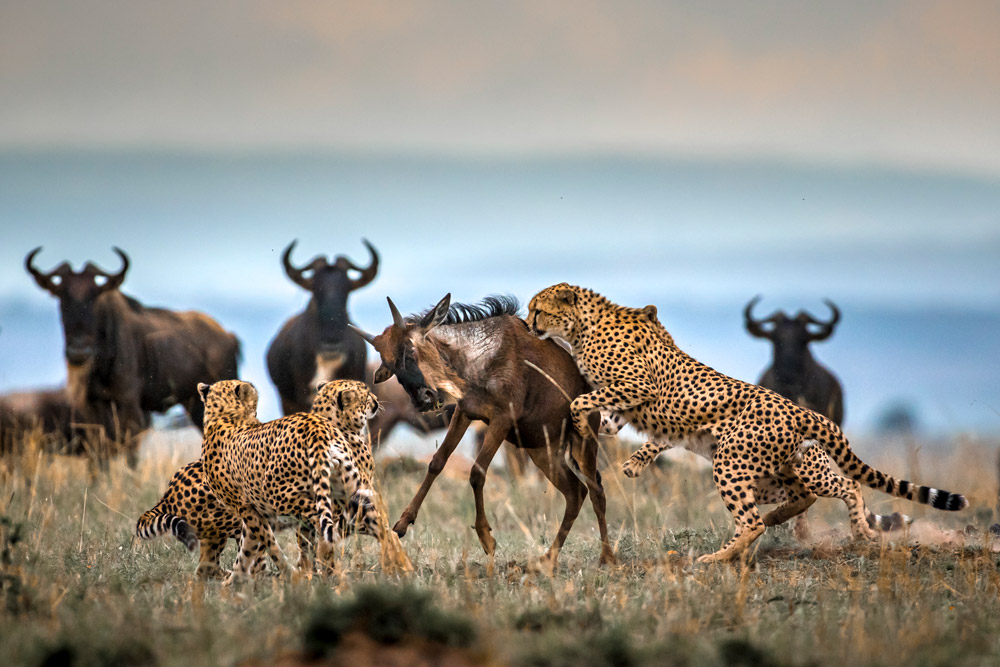
- High Predator Action: The abundance of vulnerable, newborn calves acts as a massive magnet for predators. If you want to see lions, cheetahs, leopards, and hyenas actively hunting on the wide-open plains, this is the absolute best time and place to be.
🌧️ April to June: The Trek North (Western Corridor & Central Serengeti)
As the southern plains dry up and the grass is depleted, the herds begin moving northwest in search of food.
This marks the great migration in tanzania.
What Happens:
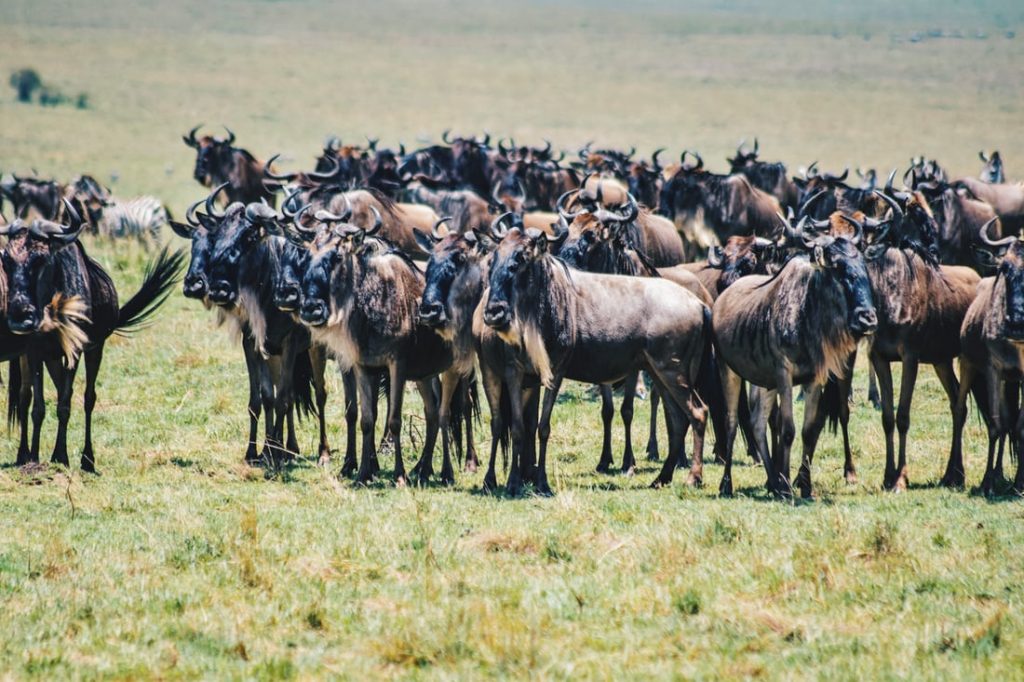
- April and May: The herds split into smaller columns and head toward the Western Corridor of the Serengeti. This coincides with the heavy rains (Masika). Wildlife viewing is spectacular, but navigating the muddy roads requires a highly skilled driver-guide and a robust 4×4.
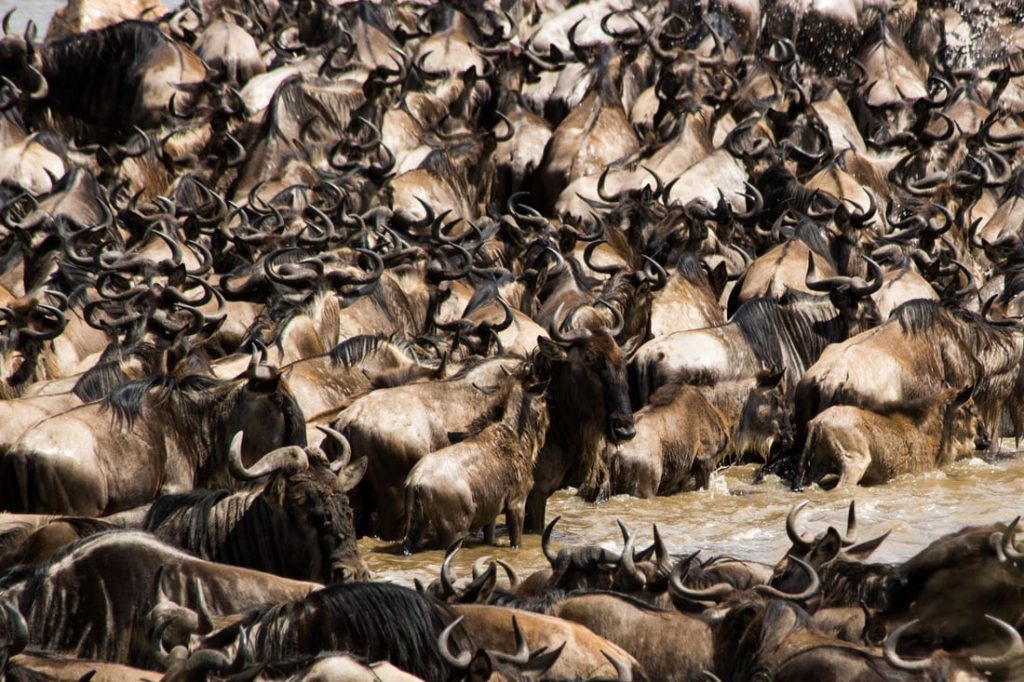
- June (The Grumeti River Crossing): The migration gathers around the Grumeti River in the West. While not as massive as the Mara River crossings, the herds must brave the muddy waters of the Grumeti, which is home to some of Africa’s largest Nile crocodiles.
🐊 July to October: The Iconic River Crossings (Northern Serengeti)
This is the peak of the dry season and the most famous phase of the Migration. The herds have eaten their way through the western and central Serengeti and are heading to the Northern Serengeti and Kenya’s Masai Mara.
What Happens:
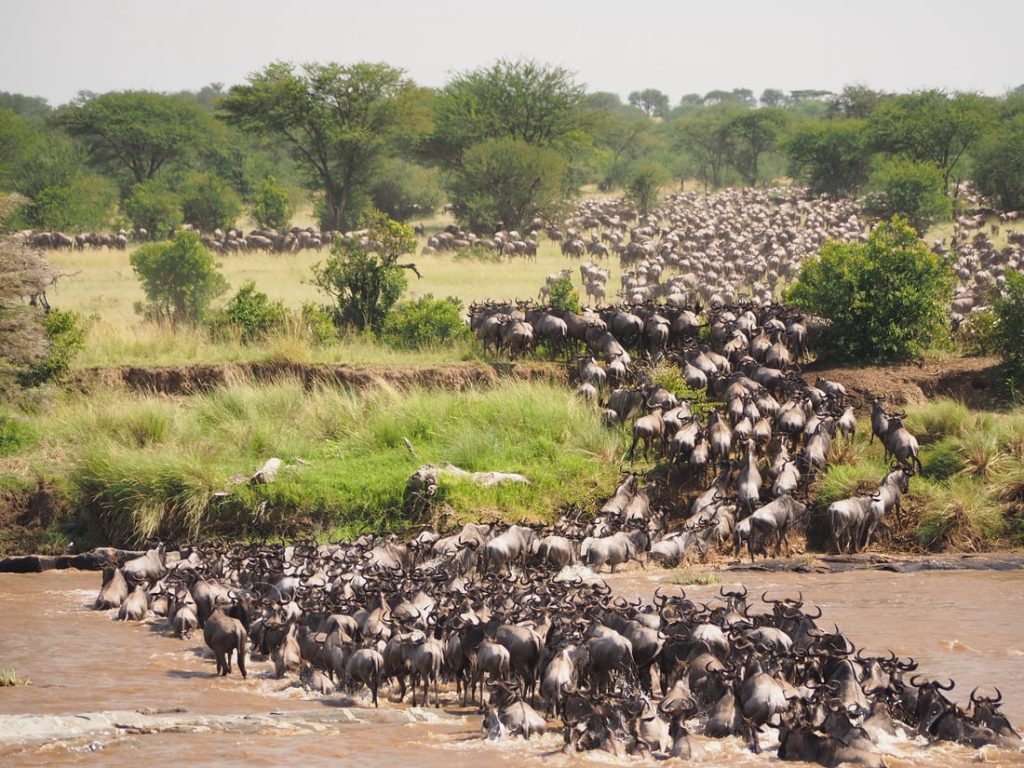
- The Mara River Crossings: To get to the fresh green grass on the other side, the wildebeest must cross the treacherous Mara River. Hundreds of thousands of animals gather on the riverbanks, waiting for days out of nerves. When the first brave animal leaps into the water, a chaotic, high-adrenaline stampede follows as they dodge giant crocodiles and steep, rocky embankments.
- Where to Stay: Booking a mobile camp or lodge in the Kogatende or Lamai wedges of the northern Serengeti during these months places you right in the center of the action.
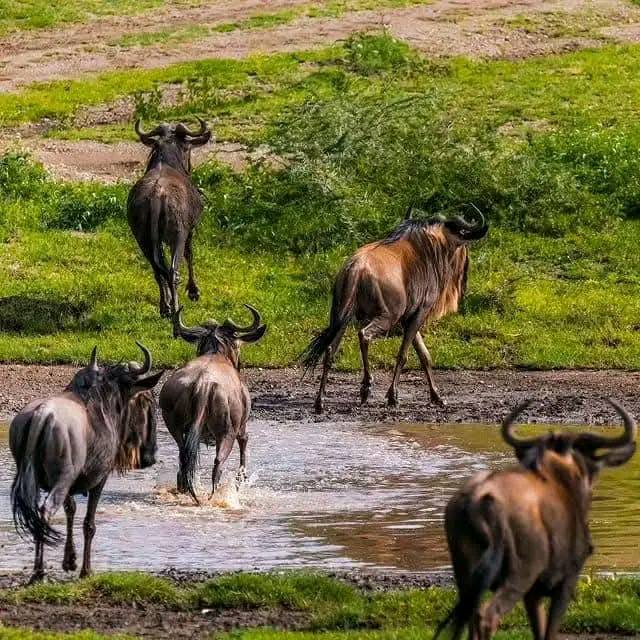
🔄 November to December: The Return Journey (Central Serengeti)
With the arrival of the short rains, the herds sense the fresh grass.
It grows back on the southern plains and they begin their journey back south.
What Happens:
- The Southern Trek: The migration moves rapidly through the eastern and central parts of the Serengeti (Seronera).
- December Dynamics: By late December, the herds are back in the southern Serengeti and Ndutu plains, ready to feed on the nutrient-rich grass and begin the cycle all over again with the next calving season.
🗓️ Quick Reference: Great Migration Location Calendar
| Month | Exact Location in Tanzania | Key Event / Highlight | Best Safari Strategy |
| January | Southern Serengeti & Ndutu | Herds gathering on short-grass plains. | Focus on Southern Serengeti circuits. |
| February | Ndutu & Southern Serengeti | Peak Calving Season (8,000+ births daily). | Best for predator hunts & photography. |
| March | Southern to Central Serengeti | Calves are strong; herds prepare to move. | Good mix of Southern and Central regions. |
| April | Central Serengeti & Western Corridor | Herds moving Northwest; heavy rains. | Great prices; low vehicle crowds. |
| May | Western Corridor (Grumeti) | Mega-columns forming along the corridor. | Stay in Western Serengeti lodges. |
| June | Western Corridor to North | Grumeti River crossings & migration moving North. | Transition month; great for central/west. |
| July | Northern Serengeti (Kogatende) | Herds reach the Mara River; Crossings begin. | Book Northern Serengeti well in advance. |
| August | Northern Serengeti & Mara River | Peak River Crossings (High drama). | Absolute peak season; fly-in safaris excel. |
| September | Northern Serengeti & Masai Mara | Continued river crossings back and forth. | Excellent northern wildlife viewing. |
| October | Northern to Central Serengeti | Last of the crossings; herds head back South. | Transition back to Central Serengeti. |
| November | Central & Eastern Serengeti | Short rains trigger a rapid move South. | Focus on Central Serengeti (Seronera). |
| December | Central to Southern Serengeti | Herds arrive in Ndutu for the new cycle. | Excellent festive season wildlife viewing. |
🗺️ Ready to Witness the Great Migration Live?
Because the Migration moves constantly, booking the wrong lodge in the wrong region can mean missing the herds completely.
Additionally, our local safari experts live and breath the Serengeti ecosystem. We tailor an itinerary around your dates to keep you in the action with the great migration in tanzania.